
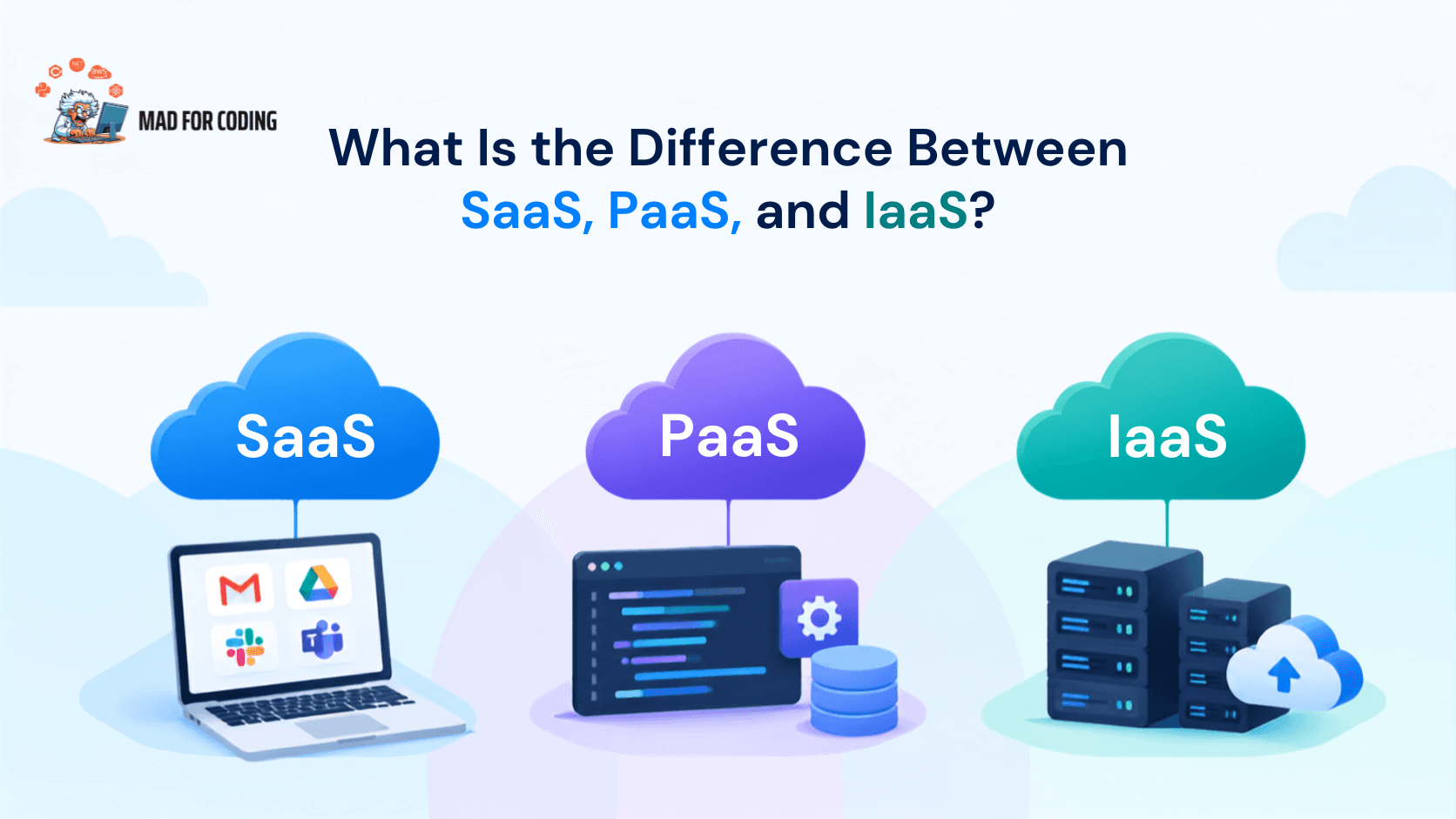
SaaS vs. PaaS vs. IaaS at a Glance
If you're wondering about the difference between SaaS, PaaS, and IaaS, here's the simple explanation:
SaaS (Software as a Service) provides ready-to-use software over the internet. You simply use the application while the provider manages everything behind the scenes.
PaaS (Platform as a Service) offers developers a cloud-based platform to build, test, and deploy applications without managing servers or infrastructure.
IaaS (Infrastructure as a Service) provides virtual computing resources like servers, storage, and networking, giving businesses maximum control over their cloud environment.
In short, SaaS is for using software, PaaS is for building software, and IaaS is for managing infrastructure.
Key Takeaways
• SaaS, PaaS, and IaaS are the three primary cloud service models.
• SaaS is best for businesses that need ready-to-use software with minimal maintenance.
• PaaS helps developers build and deploy applications faster without worrying about infrastructure.
• IaaS offers the greatest flexibility and control by providing virtual servers, storage, and networking resources.
• Many organizations use a combination of SaaS, PaaS, and IaaS to support different business needs.
• Choosing the right cloud model depends on your technical requirements, budget, scalability goals, and level of infrastructure control.
Introduction
Cloud computing has transformed the way businesses build, deploy, and manage software. Instead of purchasing expensive hardware or maintaining complex on-premise infrastructure, organizations can now access computing resources, development platforms, and software applications through the cloud.
However, when exploring cloud solutions, you'll often come across three terms: SaaS (Software as a Service), PaaS (Platform as a Service), and IaaS (Infrastructure as a Service).
While they all fall under the umbrella of cloud computing, they serve different purposes and are designed for different business needs.
Understanding the difference between SaaS, PaaS, and IaaS helps businesses make smarter technology decisions, optimize costs, improve scalability, and accelerate digital transformation.
In this guide, we'll explain each cloud service model in simple terms, compare their features, discuss real-world use cases, and help you determine which option best fits your business.
Understanding Cloud Service Models
Cloud computing allows businesses to consume IT resources over the internet instead of owning and maintaining everything themselves.
Think of it like transportation.
Buying a car means you own and maintain everything.
Renting a car means someone else handles maintenance while you simply drive.
Taking a taxi means you only use the service when needed.
Cloud services work similarly.
The more responsibility your cloud provider manages, the less work your internal team has to do.
The three primary cloud service models are:
• Software as a Service (SaaS)
• Platform as a Service (PaaS)
• Infrastructure as a Service (IaaS)
Each offers a different level of control and flexibility.
What Is SaaS (Software as a Service)?
Software as a Service (SaaS) delivers fully functional software applications through the internet. Users simply log in through a web browser or mobile app without worrying about installation, updates, security patches, or infrastructure management.
The cloud provider manages everything behind the scenes.
Examples include:
• Customer Relationship Management (CRM)
• Project Management Software
• Email Platforms
• Video Conferencing Tools
• Accounting Software
• HR Management Systems
How SaaS Works
Instead of installing software on every computer, businesses subscribe to an online service.
The provider handles:
• Hosting
• Infrastructure
• Security
• Maintenance
• Updates
• Backups
• Performance
Users simply focus on using the application.
Benefits of SaaS
Quick Deployment: Most SaaS products are ready to use within minutes.
Lower Upfront Costs: No need to purchase servers or expensive software licenses.
Automatic Updates: Businesses always access the latest version without manual upgrades.
Accessibility: Employees can work from anywhere using an internet connection.
Predictable Pricing: Monthly or annual subscriptions simplify budgeting.
Best Use Cases
SaaS is ideal for businesses that want ready-to-use software without managing technical infrastructure.
Examples include:
• CRM solutions
• ERP systems
• Email platforms
• Collaboration software
• Helpdesk systems
What Is PaaS (Platform as a Service)?
Platform as a Service provides developers with everything needed to build, test, deploy, and manage applications without maintaining the underlying infrastructure.
Instead of managing servers and operating systems, developers focus entirely on writing code.
The provider manages:
• Servers
• Storage
• Networking
• Operating systems
• Runtime environments
• Middleware
• Security updates
Developers manage:
• Application code
• Business logic
• APIs
• Databases (depending on configuration)
Why Businesses Choose PaaS
PaaS significantly speeds up software development.
Instead of spending weeks configuring environments, development teams can start coding immediately.
Benefits include:
Faster Development: Pre-configured environments reduce setup time.
Improved Collaboration: Teams can work in standardized environments.
Built-in Development Tools: Many PaaS providers include CI/CD pipelines, monitoring, version control, and deployment automation.
Scalability: Applications automatically scale as traffic grows.
Reduced Infrastructure Management: Developers spend more time building features instead of maintaining servers.
Best Use Cases
PaaS is commonly used for:
• Web application development
• Mobile app development
• API development
• AI applications
• SaaS product development
• Internal business applications
What Is IaaS (Infrastructure as a Service)?
Infrastructure as a Service provides virtualized computing resources over the internet.
Instead of buying physical servers, businesses rent computing infrastructure from a cloud provider.
This includes:
• Virtual machines
• Storage
• Networking
• Load balancers
• Firewalls
• Compute resources
Unlike SaaS or PaaS, businesses have complete control over operating systems, software, applications, and configurations.
Why Businesses Choose IaaS
IaaS offers maximum flexibility.
Organizations can configure infrastructure exactly how they need it while avoiding the cost of purchasing physical hardware.
Benefits include:
High Flexibility: Customize servers, operating systems, and software.
Scalability: Increase or decrease resources based on demand.
Cost Efficiency: Pay only for resources consumed.
Disaster Recovery: Cloud infrastructure simplifies backups and business continuity planning.
Full Control: Ideal for businesses with unique security, compliance, or performance requirements.
Best Use Cases
IaaS is suitable for:
• Enterprise applications
• Large databases
• High-traffic websites
• DevOps environments
• Hybrid cloud infrastructure
• Disaster recovery systems
SaaS vs. PaaS vs. IaaS: Key Differences
| Feature | SaaS | PaaS | IaaS |
|---|---|---|---|
| Primary Purpose | Ready-to-use software | Application development platform | Cloud infrastructure |
| Target Users | End users | Developers | IT teams & DevOps |
| Infrastructure Management | Provider | Provider | Customer |
| Software Management | Provider | Customer | Customer |
| Operating System Control | No | Limited | Full |
| Customization | Low | Medium | High |
| Technical Knowledge Required | Low | Medium | High |
| Time to Deployment | Very Fast | Fast | Moderate |
| Scalability | High | High | Very High |
Which Cloud Service Model Should You Choose?
Choosing the right model depends on your business goals, technical expertise, and level of control required.
Choose SaaS if you need software that can be deployed quickly without lengthy installation or setup. It's an ideal choice for businesses that don't want to manage servers, infrastructure, or ongoing software maintenance. SaaS also works well for organizations with limited IT resources, as the service provider handles updates, security, and system management. If you prefer predictable subscription-based pricing and want your team to focus on productivity rather than software development or infrastructure management, SaaS is the right cloud service model.
Examples: CRM, Email, Project Management, HR Software, Accounting Platforms
Choose PaaS if you're developing custom software and want to streamline the application development process. It is a great fit for businesses with an internal development team that needs a reliable environment to build, test, and deploy applications quickly. PaaS provides built-in development tools, automation, and deployment capabilities, allowing developers to focus on writing code instead of managing servers or configuring infrastructure. If your goal is to accelerate software delivery while reducing operational complexity, PaaS is an excellent choice.
Examples: Customer portals, Mobile applications, AI-powered software, Business automation platforms, SaaS products
Choose IaaS if your business requires complete control over its IT infrastructure and the flexibility to customize servers, storage, networking, and operating systems. It is well suited for organizations running enterprise-grade applications, handling complex workloads, or operating in environments with specific performance and compliance requirements. IaaS is also an excellent option if you have a dedicated DevOps or IT infrastructure team that can manage and optimize cloud resources. If advanced networking, enhanced security controls, and maximum scalability are priorities, IaaS provides the level of control needed to support your business.
Examples: Enterprise software, High-performance applications, Hybrid cloud environments, Disaster recovery systems, Large-scale web platforms
Can Businesses Use More Than One Cloud Service Model?
Absolutely.
Many organizations use a combination of SaaS, PaaS, and IaaS to meet different operational needs.
For example:
• Employees use SaaS applications for communication and project management.
• Developers use PaaS to build customer-facing applications.
• IT teams use IaaS to host databases and enterprise systems.
This approach allows businesses to balance flexibility, productivity, and cost efficiency.
How Cloud Computing Supports Business Growth
Modern businesses require technology that can adapt quickly to changing customer demands.
Cloud service models help organizations:
• Launch products faster
• Reduce infrastructure costs
• Scale globally
• Improve collaboration
• Increase application reliability
• Strengthen security through managed services
• Support remote and hybrid workforces
• Accelerate digital transformation initiatives
Whether you're a startup building your first SaaS product or an enterprise modernizing legacy systems, cloud computing provides the flexibility needed for long-term growth.
Common Misconceptions About SaaS, PaaS, and IaaS
"SaaS Is Only for Small Businesses"
Many global enterprises rely heavily on SaaS solutions because they reduce maintenance overhead and improve collaboration across distributed teams.
"PaaS Removes Developer Control"
While the provider manages the infrastructure, developers still have full control over application code, architecture, and deployment workflows.
"IaaS Is Too Expensive"
IaaS often reduces costs by eliminating the need for purchasing and maintaining physical hardware. Businesses pay only for the resources they actually use.
"One Model Is Better Than the Others"
There is no universally better option. Each model serves different business requirements, and many organizations successfully combine all three.
Future Trends in Cloud Computing
Cloud services continue to evolve alongside emerging technologies.
Key trends include:
• AI-powered cloud platforms
• Serverless computing
• Edge computing
• Multi-cloud strategies
• Hybrid cloud adoption
• Cloud-native application development
• Enhanced cybersecurity and compliance automation
• Sustainable cloud infrastructure
Businesses adopting modern cloud strategies today will be better positioned to innovate and scale in the future.
Conclusion
SaaS, PaaS, and IaaS each play a vital role in today's cloud ecosystem, but they solve different challenges.
If you need ready-to-use business software, SaaS is the simplest choice. If you're developing custom applications and want to accelerate delivery, PaaS provides the tools and environment to build efficiently. And if your organization requires complete control over infrastructure, security, and configurations, IaaS offers the flexibility to create a tailored cloud environment.
Rather than viewing these models as competing options, think of them as complementary solutions. Many successful businesses use a combination of all three to improve productivity, streamline development, reduce operational costs, and support long-term growth.
As cloud technology continues to evolve, selecting the right service model or the right combination can help your business stay agile, scalable, and ready for future innovation.
Looking to build scalable cloud-native applications or modernize your existing infrastructure? Our cloud development experts can help you choose the right architecture, implement secure cloud solutions, and accelerate your digital transformation with tailored SaaS, PaaS, and IaaS strategies.
Frequently Asked Questions
What is the main difference between SaaS, PaaS, and IaaS?
SaaS provides ready-to-use software, PaaS offers a platform for developing applications, and IaaS delivers virtual infrastructure such as servers, storage, and networking resources.
Which cloud model is the easiest to use?
SaaS is the easiest because users simply access the software through a browser without managing infrastructure or updates.
Is PaaS suitable for startups?
Yes. PaaS helps startups build and launch applications quickly while reducing infrastructure management and operational complexity.
Can a business use SaaS, PaaS, and IaaS together?
Yes. Many businesses combine all three models to optimize productivity, software development, and infrastructure management.
Which cloud model offers the most control?
IaaS provides the highest level of control because businesses manage the operating systems, applications, and configurations while the cloud provider supplies the infrastructure.
📩 Talk to our team: sales@madforcoding.com
📅 Book your free 30-minute cloud consultation: Schedule now
🌐 Explore more: www.madforcoding.com
👉 Let’s streamline your operations — and scale like never before.